The History of Investment Castings: Older Than You’d Think!
It is hard to imagine that at one time, even prehistoric humans produced investment castings. There is proof that some forward-thinking people in Egypt over 5,000 years ago used beeswax to form desired geometric shapes, coated the beeswax with clay, and placed the assembly in a fire to melt the beeswax and cure the clay. They would then melt low-melting-point metals to fill the now-hollow clay mold to make arrowheads, jewelry, and other small artifacts.
That is considered the meagre start of what would become today’s highly technical business of manufacturing investment castings.
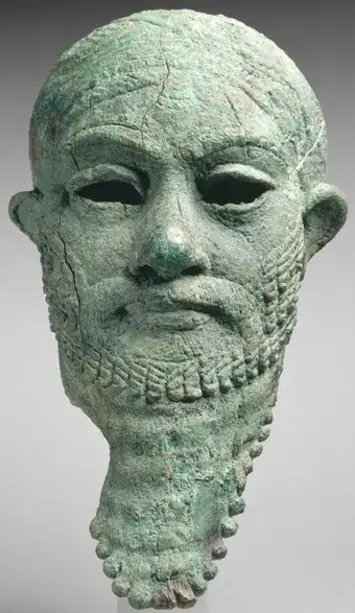
While the industry has taken huge steps forward from those early days, the concept remains unchanged: wax pattern replicas of the desired metal part, which can easily be formed, then coated, then melted out from inside a refractory mold and replaced with molten metal and allowed to cool and solidify, form the most basic explanation of what an investment casting is.
The concept of this technique in today’s more advanced world has allowed companies like Niagara Investment Castings to produce a wide range of cast metal components that find applications in nearly every industrial sector today, from simple hardware to the critical components found in aircraft engines, nuclear reactors, and medical implants that allow humans to enjoy all life has to offer. We can guide you through the entire process.
What is Investment Casting Used For?
The question of what investment casting is used for is not simple, with a simple answer. This is because investment casting is a highly versatile, cost-effective manufacturing process that can be used to produce ANY metal shape from virtually ANY metal alloy.
The process offers advantages over other manufacturing processes that make it more favourable for certain applications, but it also has disadvantages that limit its appeal to end users, both economically and physically.
Disadvantages of the investment casting process tend to be centred around when the castings get overly large and/or heavy, if the castings are extremely small or have walls that are under 0.100” thickness, or if dimensional tolerances are so tight for most of the features that only machined finishes could meet those requirements. Otherwise, there are unlimited potential applications for investment castings in today’s industry.
Advantages of Investment Castings
Intricate Internal Designs
Investment castings provide the designer with the ability to produce complex internal designs which cannot be produced by other methods, for example, the flow path deep inside an enclosed impeller, a vital component for the pump industry. The curved shape of this space cannot be obtained by conventional machining.
Superior Surface Finish and Smoothness
Investment castings typically have a smooth surface finish of 125 RMS or better, far ahead of the surface finish achievable with any other casting method for high-melting-point metal alloys.
Cost Efficiency
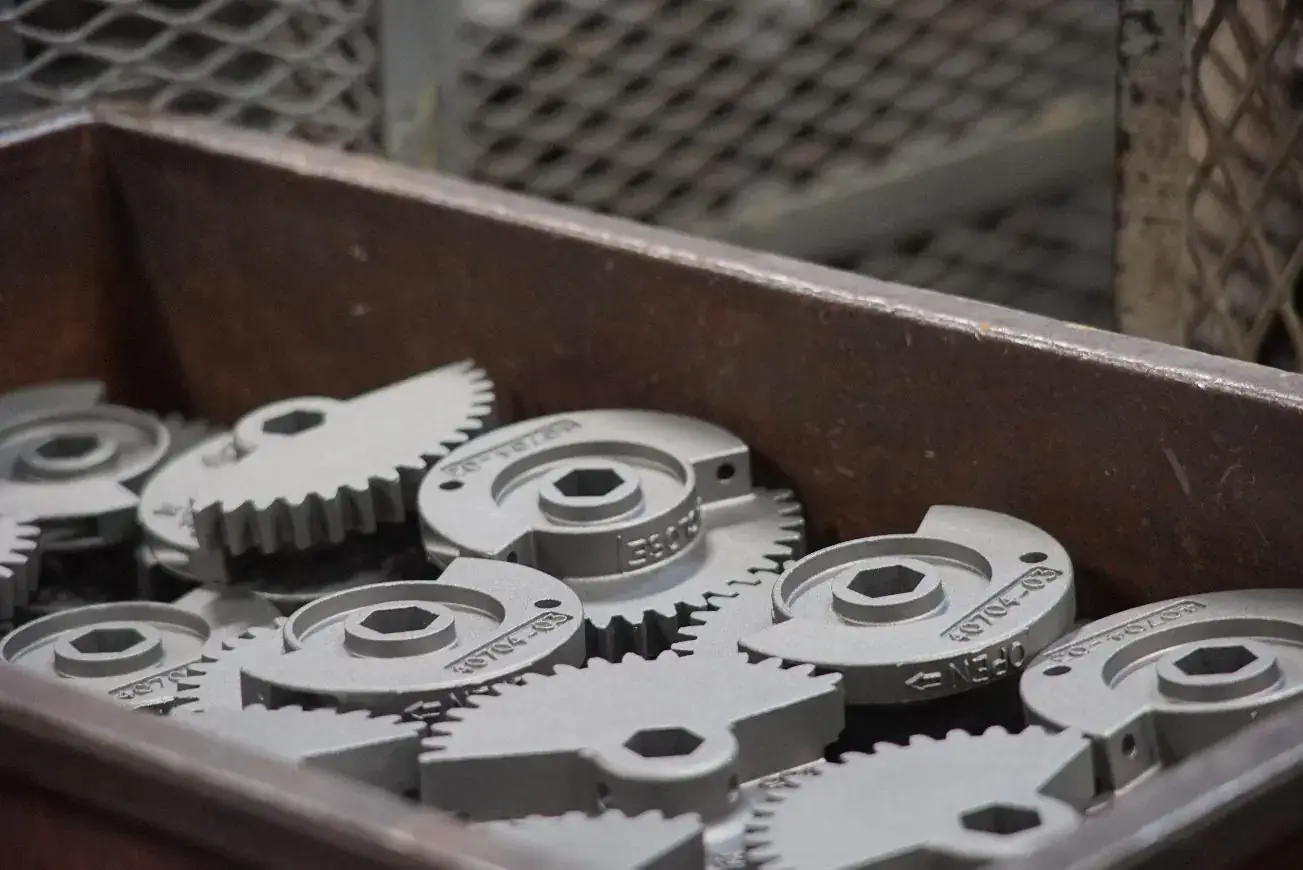
Investment castings can be produced to incredibly tight tolerances, enabling the casting of details that often do not require machining to finish the component. The term “near-net-shape” is therefore synonymous with the process. This allows machine manufacturers a unique and cost-effective method to produce many multiples of the same metal part.
Material Versatility
Investment castings offer the design engineer the ability to cast challenging geometric shapes to tight tolerances. This means that rather than “removing material” from a generic shape, the geometry can be formed by flowing molten metal in the desired shape. This feature is especially important when the metal being cast is difficult to machine in its solid state.
Low or High Volume Run Versatility
Investment casting uses a disposable pattern at its core. Whereas higher volume castings are most economically produced from wax patterns obtained through the use of a wax injection die to produce these patterns, we are also able to use a 3D printed PLASTIC pattern for one-off prototype samples or low volume jobs, meaning that the advantages of the investment casting process are not limited to those manufacturing high numbers of parts only.
How is Investment Casting Different From Other Methods
The investment casting process differs from other casting methods primarily due to the “pattern” and “molding material” used.
All casting methods involve the melting and refining of the metal to turn it into a liquid that can be passed through some sort of delivery system, called gating, and into the open cavity inside a mold, where the metal is allowed to cool to room temperature once again and reform as a solid in the shape of the cavity the molten metal filled.
Investment Castings vs. Sand Casting vs. Gravity Die Casting vs. Die Casting
The following chart compares investment castings, sand castings, and the two common “permanent mold” casting methods.
| Process | Investment (Lost Wax) | Green Sand | Permanent Mold (Gravity Die Casting) | Die Casting |
|---|---|---|---|---|
| Metals Cast | Nearly all ferrous and non-ferrous alloys | Wide range of ferrous and non-ferrous alloys | Nonferrous alloys (Al, Zn, Mg) | Nonferrous alloys only (Al, Zn, Cu, Mg, Sn, Pb) |
| Complexity of Shape | Highest complexity | Low Complexity | Low/Medium | Low Complexity |
| Casting Weight | Up to 200 lbs. | Virtually Unlimited | Ounces to 250 lbs. | Ounces to 40 lbs. |
| Min. Section Thickness | 0.100″ Minimum | 0.125″-0.250″ | 0.060″-0.250″ | 0.025″-0.080″ |
| Linear Dimensional Tolerances | +/-0.010” on the first inch, and an additional +/-0.005” for each additional inch | +/- 0.015-0.250 in Add +/- 0.015″-0.250″ across parting plane | Under 1″: +/- 0.010. Over 1″ add +/- 0.002 in/in. Add +/-0.015-0.060″ across parting plane | +/-0.0015-0.005 in Add +/-0.001″-0.005″ across parting plane |
| Surface Finish (Micro Inches) | 63-125 | 150-500 | 150-350 | 32-63 |
| Tooling Costs | Low-to-Moderate | Low | Moderate | High |
| Optimum Lot Size | Unlimited | Small to large, depending on the degree of process mechanization | Medium | Large |
| Draft Required | None | 1-5 degrees | 2-5 degrees | 1/2 to 2 degrees |
| Advantages | No Parting Plane. Can cast nearly all metals. Castings require minimal machining. | High production rates possible through mechanization. Lowest casting costs. | Mold life of 15,000 cycles or more, depending upon the pouring temperature of the metal and upon casting specs. Both metal and sand cores are used. | Mold life from 15,000 cycles, depending upon the pouring temperature of the metal and the casting specs. Near-net-shape castings require minimal machining. |
Industries Investment Castings Are Used
The kinds and numbers of industries that use investment castings are unlimited. If a metal part can be produced within the very wide range of the process’s capabilities, it is a candidate for investment casting.
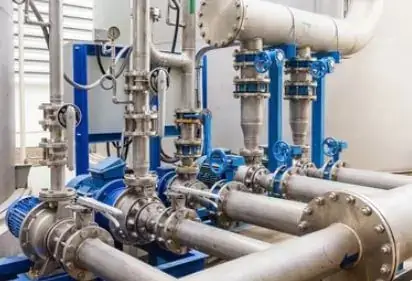
Looking around our modern world, you will find investment castings in the pumps that feed water to our towns, valves and control systems for the natural gas that warms our homes, and in the nuclear generators, wind turbines, and electrical switches that power our lives with electricity.
You will find investment castings used for implants helping patients gain a new lease on life, in the surgical tools doctors use to help make us better, and in the hardware found throughout every building we find shelter in and work in.
Finally, you will find investment castings in use in the many types of military and defence machinery that protect us from harm, and in the engines of the airplane that take us away for our much-needed vacations.
Investment castings are literally everywhere today, yet many still do not know about this extremely unique and valuable manufacturing technique. Niagara Investment Castings can help you discover how investment casting can serve your industry.
For a more comprehensive list of the industries Niagara Investment Castings serves, please visit our website at this link.
Optimize Your Manufacturing Process with Niagara Investment Castings
Staying competitive in today’s global market requires resourceful, innovative thinking. That is the exact mindset driving the expert team at Niagara Investment Castings.
We are ready to partner with you on all your casting requirements, including uncovering new efficiencies you might not have considered yet. Let’s find the perfect solution for your specific application. Contact us today to start the conversation.